
Supporting Those with Aphasia: Communication Tools from Our Latest Training
At Cheer Home Care, we believe high-quality care starts with education and empathy. That’s why our team recently attended an online training session titled “Management Skills for Caring for an Aphasic Person,” hosted by Jenerations Health Education in partnership with Oasis Senior Advisors. This learning opportunity provided tools and renewed confidence to support individuals living with aphasia and their care networks to live better lives.
What is Aphasia?
Aphasia is a language disorder that affects a person’s ability to communicate. It commonly occurs when a blood vessel in the brain ruptures or becomes blocked, reducing blood flow to areas that control speech and comprehension. In most cases, the left side of the brain is impacted, resulting in difficulty with speaking, understanding others, reading, and writing. Aphasia does not affect intelligence; it disrupts language access, which can lead to frustration, isolation, and emotional challenges for both individuals and their families. Recognizing how to communicate effectively is one of the most valuable tools a caregiver can offer!
Training Partners and Program Focus
The training was led by Jenerations Health Education, an organization dedicated to advancing professional development in aging, dementia, and caregiving practices. They were joined by Oasis Senior Advisors, a trusted partner in navigating care options for older adults and their families. Together, they guided attendees through the causes of aphasia, who it affects, and how to foster supportive, two-way communication when traditional language skills are limited.
Practical Communication Techniques for Aphasia Care
One of the most powerful lessons from the session was how small adjustments can significantly improve communication with someone experiencing aphasia. Here are some key techniques discussed:
- Be patient and give the person time to process and respond
- Use hand gestures, facial expressions, and visual aids to supplement spoken words
- Speak slowly and clearly, emphasizing keywords
- Repeat phrases if needed, and avoid rushing or interrupting
- Limit background noise and distractions to maintain focus
- Use writing or technology, such as typing on an iPad or smartphone
- Observe cues in tone, body language, and eye contact to interpret meaning better
- Introduce tools such as Lingraphica AAC devices for those who may benefit from augmentative communication aids
How Aphasia Impacts the Whole Care Circle
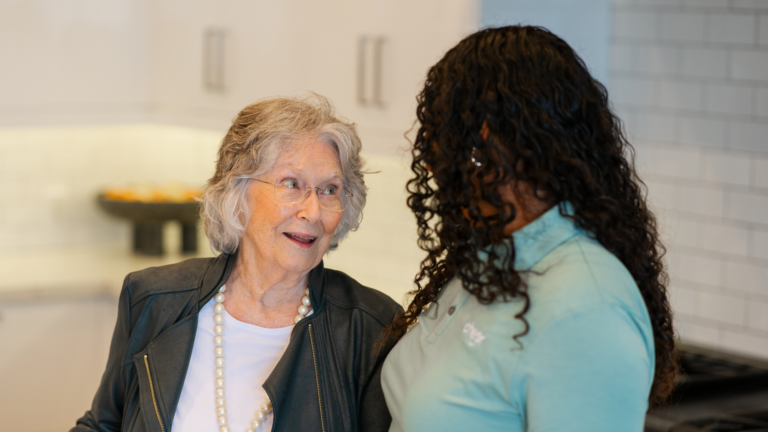
Aphasia changes not only how someone expresses themselves but also how they connect with others, which can be challenging for family members and caregivers who are accustomed to communicating in familiar ways. Caregivers may struggle with uncertainty or fear of saying the wrong thing. It’s essential to recognize that clear, compassionate communication (no matter how imperfect) can still promote trust and emotional safety. With the right tools and support, it’s possible to build meaningful connections despite the communication barrier.
Resources
Amy Joiner recently highlighted several excellent resources caregivers can explore to better support someone with aphasia. These include:
- ASHA – American Speech-Language-Hearing Association
- Aphasia Recovery Connection (ARC)
- Tactus Therapy
- Aphasia Institute
- Aphasia Software Finder
- Aphasia simulations and caregiver training videos on YouTube
- The Aphasia Channel – a collection of real-life stories and techniques
These resources empower caregivers to gain practical knowledge and confidence as they support loved ones or clients through their communication journey.
Team Reflections and Takeaways
Hearing from other professionals in the field was a powerful reminder of the importance of shared knowledge and continuous learning. Many participants shared personal experiences of working with individuals with aphasia, reinforcing how challenging and rewarding this work can be. Amy Joiner, Director of Education and Development at Cheer Home Care, reflected on the training by saying: “I feel more supported, confident, and equipped to assist our team when we’re working with clients and families impacted by aphasia. We now have more tools and resources to support better outcomes.”
Our Ongoing Commitment to Learning
Caregiving is not a one-size-fits-all journey. It takes continuous education, shared stories, and evidence-based tools to meet the evolving needs of our community. That’s why we prioritize professional development for our team and continue to collaborate with trusted partners who are advancing the standards of care.
Learn More and Connect With Us
If you are supporting a loved one or client with aphasia, you are not alone. Cheer Home Care is here to provide resources, guidance, and compassionate care that adapts to the unique needs of every individual. To learn more about the organizations involved in this training or to explore our care services, visit the links below: